




Glass Wall Art for the Dining Room — How to Choose a Piece That Comes Alive Under Evening Light
The Dining Room Is Built Around Evening Light — and So Is Glass
Every room in your home has a natural lighting condition — the light it is most often experienced in. For a home office, it is flat daytime working light. For a bedroom, it is soft morning and low evening light. For the dining room, it is something specific and distinctive: warm evening light.
Think about when your dining room is actually used and seen. It is the evening. It is dinner. It is the warm glow of a pendant light over the table, the flicker of candles, the golden low light that a dining room is designed around. Unlike a kitchen or an office, the dining room is rarely experienced in harsh daylight — it comes alive at night, under warm, directional, atmospheric light.
This matters enormously for wall art, because warm evening light is precisely the condition in which glass wall art performs best — and precisely the condition in which canvas performs worst.
Why Glass Wall Art Belongs in a Dining Room
Under the warm pendant and candle light of an evening dining room, a canvas print does what canvas always does: it absorbs the light and reads flat. The warm glow of the room reaches the canvas and disappears into the fabric. The piece sits there, dull and static, contributing nothing to the atmosphere the lighting is working to create.
Glass does the opposite. The reflective surface catches the warm directional light of the pendant or the candles and comes alive with it. The metallic and gold elements in an abstract piece appear to glow. The colours deepen and warm. The whole piece participates in the room's atmosphere rather than sitting flat against it. As the light shifts — as candles flicker, as the evening progresses — the glass piece shifts with it, subtly, continuously.
This is the reason glass wall art is genuinely, specifically suited to dining rooms in a way it is not automatically suited to every room. The dining room's defining lighting condition is the exact condition that makes glass do its most impressive work. A dinner party, a family meal, a quiet dinner for two — the glass piece on the wall is glowing quietly through all of it, adding to the atmosphere the room is built to create.
The Best Glass Wall Art Designs for a Dining Room
Dramatic Abstract — The Statement Feature Wall
The dining room is one of the few rooms where a bold, dramatic abstract piece is not just acceptable but ideal. Unlike a bedroom (which needs calm) or a home office (which needs focus), the dining room is a social, atmospheric space where a dramatic statement piece adds exactly the right energy. A deep, high-contrast abstract with gold or metallic accents becomes the centrepiece of the room — glowing under the pendant light, anchoring the dining experience.


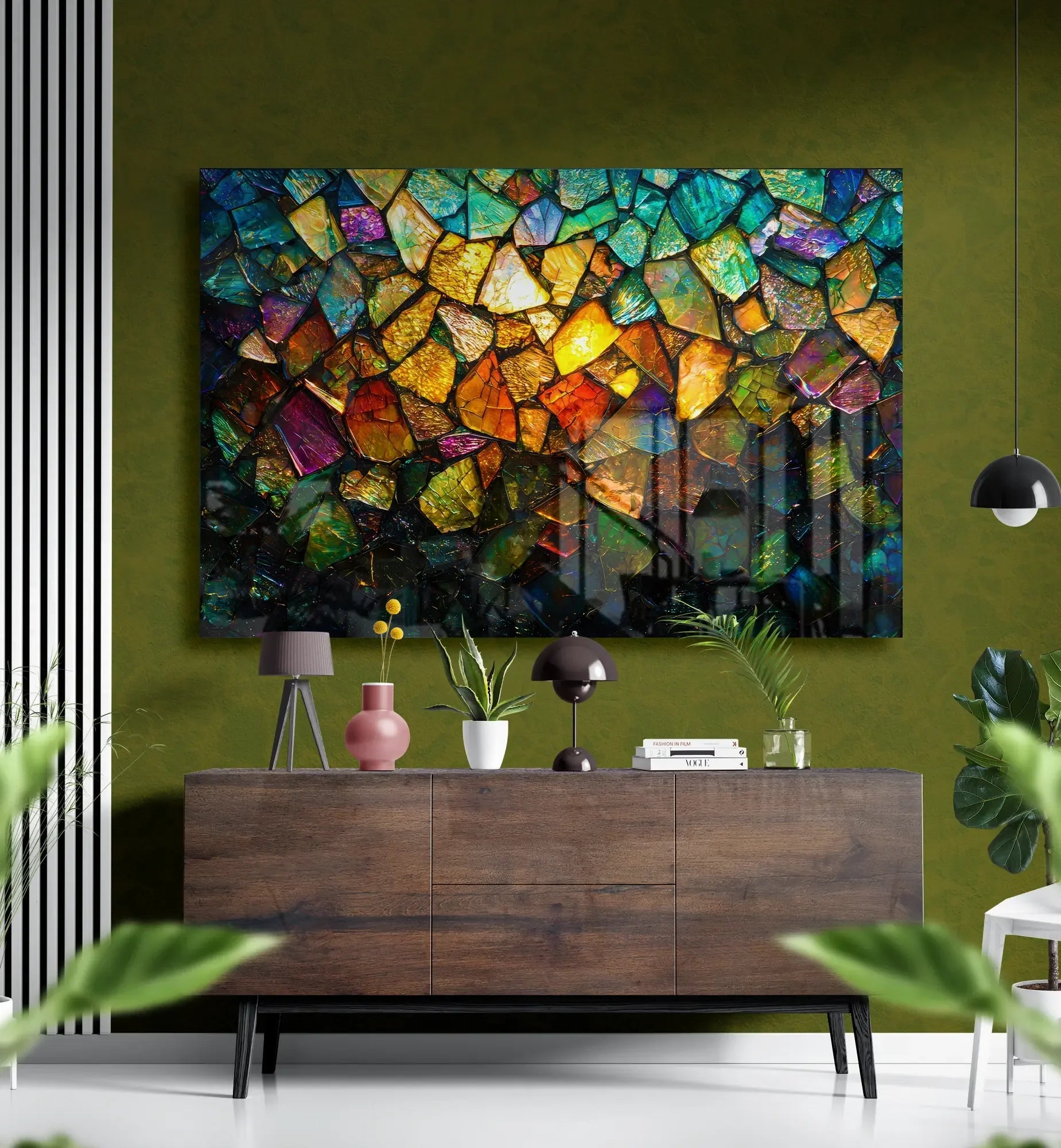
Warm and Golden — Enhancing the Evening Glow
Designs with warm gold, amber and metallic tones are perfectly suited to dining rooms because they amplify the warm evening light the room is built around. A golden abstract or warm-toned piece under a pendant light appears to radiate warmth, deepening the cozy, intimate atmosphere of a dinner. These pieces make a dining room feel richer and more inviting the moment the evening light comes on.


Nature and Coastal — Calm, Open, Elegant
For a dining room with a calmer, more elegant aesthetic, nature and coastal designs create an open, sophisticated backdrop. A landscape or ocean scene gives the room a sense of visual depth and calm that suits long, relaxed meals. These designs work particularly well in dining rooms that double as multi-use spaces, providing an elegant backdrop that works in both daytime and evening light.


What Size Glass Wall Art for a Dining Room
The dining room usually has one clear feature wall — the wall the table sits against or the main wall visible from the table. This wall calls for a generously sized statement piece. Dining room art is viewed from a seated position across the room, so it needs enough scale to register as the focal point.
| Dining Room / Wall | Recommended Size | Placement |
|---|---|---|
| Small dining area | 16" × 20" to 20" × 24" | Single feature above sideboard or on main wall |
| Standard dining room | 24" × 32" | Feature wall visible from the table |
| Large dining room | 32" × 40" | Main feature wall — statement scale |
| Above a sideboard/buffet | 2/3 width of the sideboard | Centred above the furniture, 6-10" gap |
Placement tip: If your dining room has a pendant light or chandelier, position the art so it benefits from that light source. A piece on the wall near the pendant will catch the warm downlight and glow during dinner — which is exactly when the room is most used.
Shop Dining Room Glass Wall Art
Minteefy's glass wall art brings a dining room to life under evening light — dramatic abstracts, warm golden tones, and elegant nature designs, all printed on 4.5mm premium tempered glass with the Magic Mount floating system. Free shipping across the USA and Canada. Starting at $55. 4.98 stars from 82 verified customers.
Shop Abstract → Shop Nature → Custom Print →
Questions about which design suits your dining room? Email info@minteefy.com — we respond within 24 hours.
Frequently Asked Questions
What is the best wall art for a dining room?
Dramatic abstract pieces and warm golden-toned designs are the best choices for a dining room. Unlike bedrooms (which need calm) or offices (which need focus), the dining room is a social, atmospheric space where a bold statement piece adds the right energy. Glass wall art suits dining rooms especially well because the room's warm evening lighting — pendant lights, candles — is exactly the condition in which glass catches light and glows, while canvas reads flat.
What size wall art for a dining room feature wall?
For a standard dining room, a 24" × 32" piece works well on the feature wall visible from the table. For a large dining room, go up to 32" × 40" for statement scale. Above a sideboard or buffet, choose a piece roughly two-thirds the width of the furniture, centred with a 6-10 inch gap above it. Dining room art is viewed from across the room, so err on the larger side.
Where should I hang art in a dining room?
The main feature wall visible from the dining table is the primary placement, or the wall above a sideboard or buffet. If your dining room has a pendant light or chandelier, position the art where it benefits from that warm downlight — the piece will catch the light and glow during dinner, which is when the room is most used. Centre the piece at standing eye level so it reads correctly when you enter.
Why does glass wall art look better in a dining room than canvas?
The dining room's natural lighting condition is warm evening light — pendant lights and candles. Under that warm directional light, canvas absorbs the glow and reads flat, while glass reflects it and comes alive. The metallic and gold elements in a glass piece appear to glow, colours deepen, and the piece shifts subtly as candles flicker. Glass participates in the atmosphere the dining room's lighting is designed to create; canvas sits static against it.
Can I put a bold or dramatic piece in a dining room?
Yes — the dining room is one of the best rooms for a bold, dramatic statement piece. Because it is a social, atmospheric space used mainly in the evening, a deep high-contrast abstract or a vivid design adds exactly the right energy rather than feeling overwhelming. Save the calm, muted pieces for bedrooms; the dining room can carry your boldest choice.